
Darcus Beese Talks ADHD, Signing Sabrina Carpenter and The 'Headf*ck' of Running a Major Label
"If catalogue was a 90:10 split of new artists to catalogue, we're now in a flipped world where catalogue is 90-bloody-5 percent."

Starting out as the tea guy and rising to become the first Black President of a UK major label, Darcus Beese’s story reads like a script.
That’s just page one. And the tale is still writing itself.
Beese took the elevator all the way to the top of Island Records UK, where he became the Universal Music Group company’s first Black leader in 2008, with his appointment as co-CEO.
Then, with a move to New York in 2018, he began a three-year-plus stint as CEO, becoming the only Black British president and CEO of Island Records US.
A Londoner with a full-blown love affair with Fulham FC, Beese began his music industry career in 1989 as an intern in the Island Records promotion department before making his move into A&R.
On the way up, Beese signed and guided the careers of Amy Winehouse, Remi Wolf, The Killers, Dizzee Rascal, Mumford & Sons, Florence + the Machine, Sabrina Carpenter, and many others.
In 2014, he was honoured in the Queen's Birthday Honours list, as an Officer of the Order of the British Empire (OBE), for services to the UK music industry. Two years later, in 2016, he was named by MUSEXPO Europe as European Executive Of The Year.
Reporting from inside the Australian music business since '94.
The son of Darcus Howe and Barbara Beese, members of the Mangrove Nine and two of Britain’s most important political activists, Beese surprised the industry, and himself, by leaving UMG in 2021 for Warner Music UK, serving in the dual role as EVP, WMUK and President.
In 2021, as the pandemic raged, Beese launched Darco Artist Partnerships (DAP), which flips the majors’ model, while continuing with the old-school mantra of artist development. Initially a joint venture with Warner Music, DAP is now fully independent.
Beese, a regular in Billboard’s Power Players List, is one of the international speakers locked in for BIGSOUND 2025.
The Music Network caught up with the British music man for a walk through his career, lessons learned, and much more.
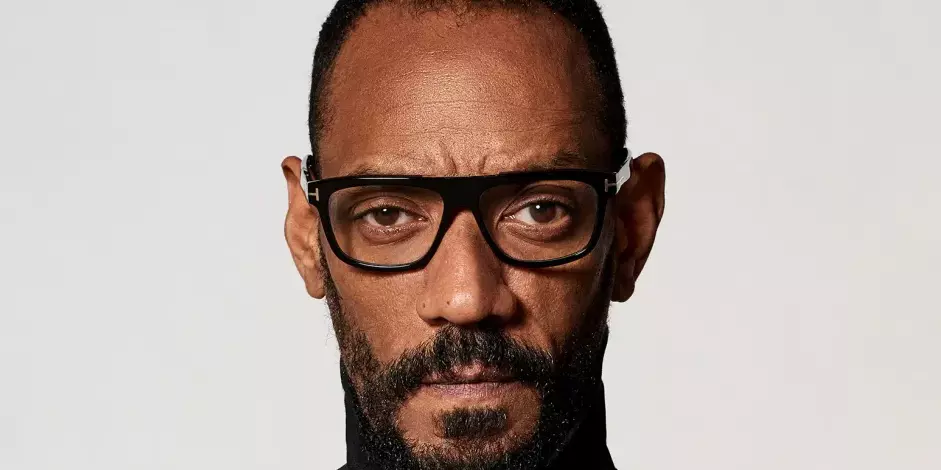 Darcus Beese photo by Meredith Truax
On Island Records founder Chris Blackwell
What Chris gave to everybody was the blueprint that if you followed it, it would look after you.
And if you ignored it, it would bite you on the arse.
Anybody that was in situ, in terms of the MD or the president at the time, all you had to do was have the courage and the conviction to follow Chris's blueprint of what he had set forth.
When I got there, Island had just been bought by Polygram. And it got too big to be an independent and wasn't big enough to be a major. So, it was kind of caught in between the two wickets, in no man's land, trying to figure out what Island was.
If it was no longer an independent or was a force of nature as an independent, what did that look like now that it was sucked into the major corporate system? Would it live or die?
The template that Chris had set forth from an independent was just a state of mind and a conviction and a belief in what Island was, and should be to artists.
If you look down the line of sight historically to present day, especially from the UK company, it hasn't wavered.
The American side became a bit of a different beast, and went through a lot of a lot of evolutions, but the UK Island stayed true from 1959 right to now.
Island was built on reggae, which was protest music. It was built on storytelling. It was built on folk and it then into rock, which was kind of storytelling and these guys had stories. And then there was that other element, which was Black music outside reggae and African World Music. Of course, Chris again had a flag in the ground early doors globally for African music. It was the ability to tell the story in hip-hop.
I was with Chris the year before. In all the years, I'd never managed to ask him all his favourite record was. He said, “probably Natural Mystic”.
I can call him a friend now. To have started at Island, when it was still an independent, and having met Chris at that time, it’s stuff you’d read in books. My life's been a bit of a movie, lived by someone else.
On the transition from tea boy to president of Island Records
The learning curve was decades long. I've never had thought that I was ever going to run the company. There was nobody that looked like me that had ever done it, right? And then why would I?
And I wasn't even confident enough to have the ambition that I was going to break that glass ceiling and be the one.
I was just doing what you do, be really good at what you do, keep your head down and don't get fired. All I wanted to do was pay my mortgage off. And live happily ever after if I got fired, if this all ended tomorrow.
Luckily (I got the job) because I maybe didn't have a sense of entitlement, maybe because I was just head down and just repeat what you do and try and be as successful, be good at your craft. Someone with the success that I had maybe would have got it sooner.
I believe that I probably got it at the right time, because it was just based on factual information. I had gone from promotions into A&R. I started as an A&R scout, signed a lot of stuff that I believe stupidly that it was amazing.
Time allowed me to find out that it wasn't that amazing, but I was getting better because I made the mistakes and I was being mentored and I was listening to people. And then eventually after a few years chipping away, you end up having success and knowing why you had the success. And when you know why you've had the success, then you have the ability to go and repeat.
And then if you repeat and you repeat spectacularly, and then the planets line up, someone's gonna tap you on the shoulder, as they did to me.
A young Black boy that came up in Island that's started in a tea room. One day I was out at lunch and they said, "You better come back from lunch."
My boss had just been let go, and within the nanosecond of me coming back from lunch, me and my co-partner at the time, Ted Cockle, were both told that we going to be co-presidents. Our response was like, “why do we have to?” And that's how much we didn't see it coming.
And when it comes, then it's a whole fucking another level of responsibility and headfuck and stress and lack of enjoyment, because it is down to you and your co-presy to carry on being successful.
And then it's just about how long can you keep a run going for before you go cold again. You learned what being cold is, and you figure out how do you pull yourself and the rest of the company out of a cold snap to go on another run again, which is why you're paid to run the company.
You get there and you kind of go, “oh, shit. They've giving me the keys.”
And then you've got to figure out, do you want to hold onto the keys, or pass them on?
On moving to The Big Apple
What was that experience like? Very eye opening. The thought had crossed my mind. Did I ever think I'd get the opportunity? Not really. Because it never happens, right?
And then one day you get a call out of the blue, the chairman wants a conversation.
As far as I was concerned, I was planning for the next three or four years in the UK, even though I was probably at that point starting to jade because I'd probably done everything that I wanted to do, I was expected to do, or not expected to do, and over-delivered.
I was thinking, what does courage and confidence look like in your decision making?
What does being brave look like? And to say “no” after being offered to go to America would have been not brave of me.
To go as a CEO was kind of mind-blowing, so whether it works or not, I was willing to take the challenge. And I was probably aware that, percentage wise, it was 80:20 against me.
Everything has to line up for you to go to a new country. To be successful, timing was everything.
I got there in 2018 just weeks after they asked me. Literally weeks after, I was in America. And the first year was brilliant. The second year was COVID, Trump was in power, which was compounding it. Then they killed George Floyd. And then you had the explosion of politics and race in America and America was burning at the time.
Work was not sustainable in terms of me landing there, trying to get up to speed. New York speed is light speed compared to the UK.
And it was also in the transition of the market because we had gone into COVID, the marketplace had changed, TikTok started to happen and data started to happen. And with that, everything came offline and went online. Gigs stopped.
On signing Sabrina Carpenter
I don't call that organic A&R. Keshi and Remi Wolf were organic A&R. Baby Rose was organic A&R. (Carpenter) was opportunistic A&R.
Where there's an artist that has ploughed a lane in Disney, just as other artists have done before her, and had gotten to a point where it was starting to fatigue both parties — Disney and probably Sabrina were fatiguing in the deal — and they were part of the Universal family, so no one wants to see an artist leave the family.
It was opportunistic in a sense that, you know, she'd already put out five albums. She was wanting to come into her own, just like, you know, Demi (Lovato) or Ariana Grande or Justin Timberlake or Britney (Spears) wanted to come into their own.
We met on Zoom because, again, we were still in lockdown and she played us a few songs and one of them was “Skin”.
I remember asking about the story behind “Skin”, and she said, "Oh, that's the story about the trifecta between me, and my last ex that used to go out with Olivia Rodrigo.” I went, "Oh shit, that's a love triangle. We're putting it out now."
And before the ink was even dry, we went straight to market with Sabrina.
On leaving Island for Warner Music
And then I made the fucking crazy decision during (the pandemic). I had not got diagnosed, and in America, the wheels started to fall off because the world had slammed shut.
My son had got diagnosed with ADHD during this period, because everybody was starting to present symptoms.
I ended up getting diagnosed with ADHD and social anxiety, which kind of fed into a retrospective of what had just gone by.
I should have never done the Warner deal when I came back from America. If I had been diagnosed with my ADHD — which is like, "What's next? What's next? What's next?" — I would have just sat for a while, figured out the world's changing, the landscape's changing. The direction of travel, the ability to affect the arc of an artist is all changing.
And when I went and did the Warner deal was right smack bang in the middle of the wheels coming off. The whole industry was having to realign.
If catalogue was a 90:10 split of new artists to catalogue, we're now in a flipped world where catalogue is 90-bloody-5 percent. That is a beautiful place for the major labels to be in. They can be a 90% split in catalogue versus wastage on new.
So, a lot of A&R started to dissipate out of the companies. A lot of marketing starts to dissipate, because new artists are no longer coming to the marketplace. A&R is a much more controlled environment because people are using data now. People are knowing where to spend their money and how to spend their money rather than willy nilly because data’s telling them. But data are can only tell you so much.
On his new business, Darco Artist Partnerships
Dignity and pride is basically the mission statement. How to do business with the artists that manages to keep the dignity in the deal and the pride of the music?
So you tie it right back to "What do I do when I get up in the morning?" We want a different relationship with the artist. We want them to be in control of their destiny. And the direct route trying to get a record deal with a major? Why now? Maybe down the line, but why now? And what's the partnership with new artists now? And also, what's the partnership with established artists who are going, do I need to be in a major anymore?
We have a percentage of artists that have global footprints and have global business and have a direct relationship with their fans, and then there are new artists and how do we bring and give air cover to those new artists to develop? How do we get back to a bit of artist development before majors come and swing in?
It's getting back to the long curve of development, as new as you are or as established as you are, how do you get from three albums to five albums? How do you get from the first album to three albums?
More from The Music Network
Reporting from inside the Australian music business since '94.
Get our top stories straight to your inbox daily by signing up to our Newsletter


